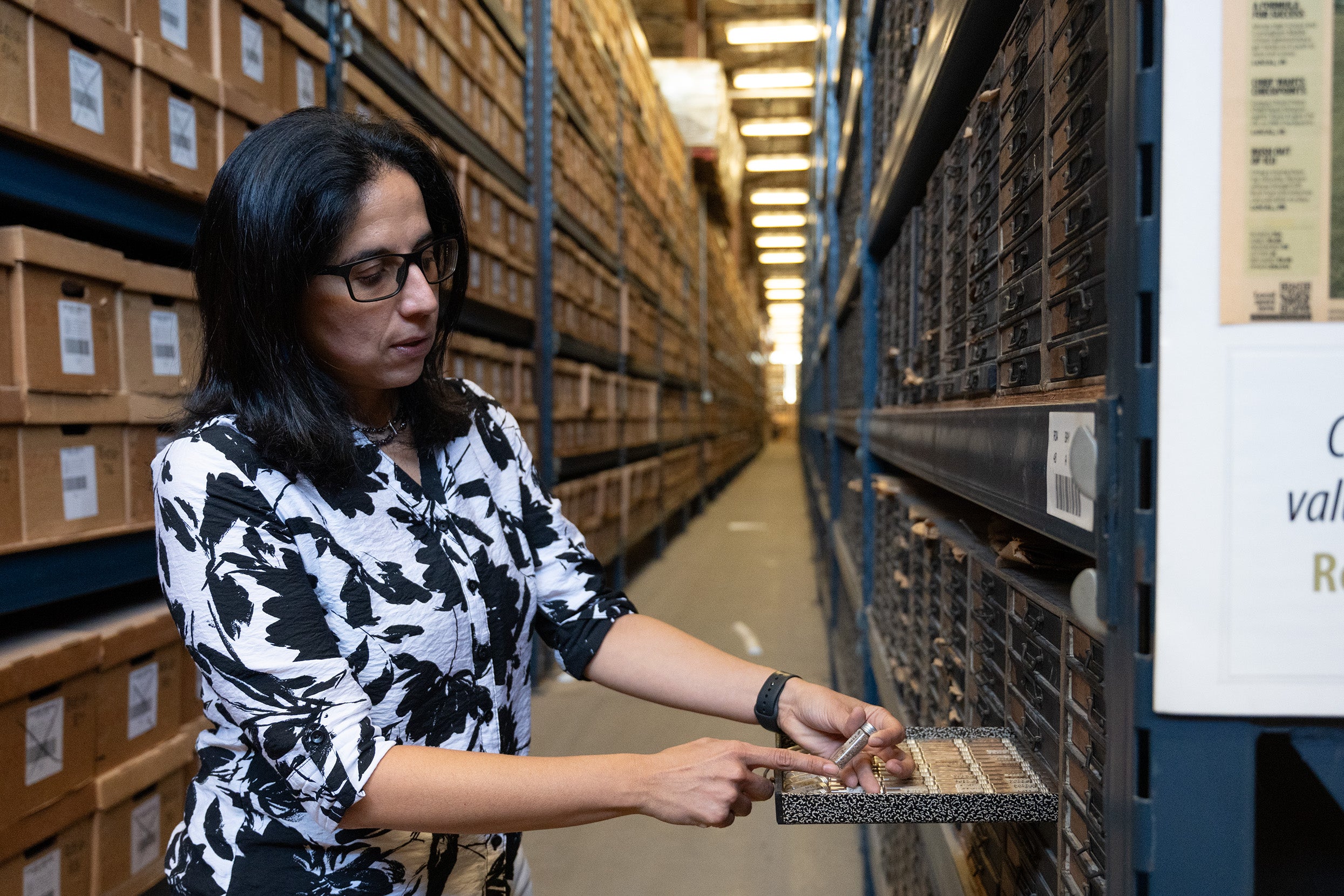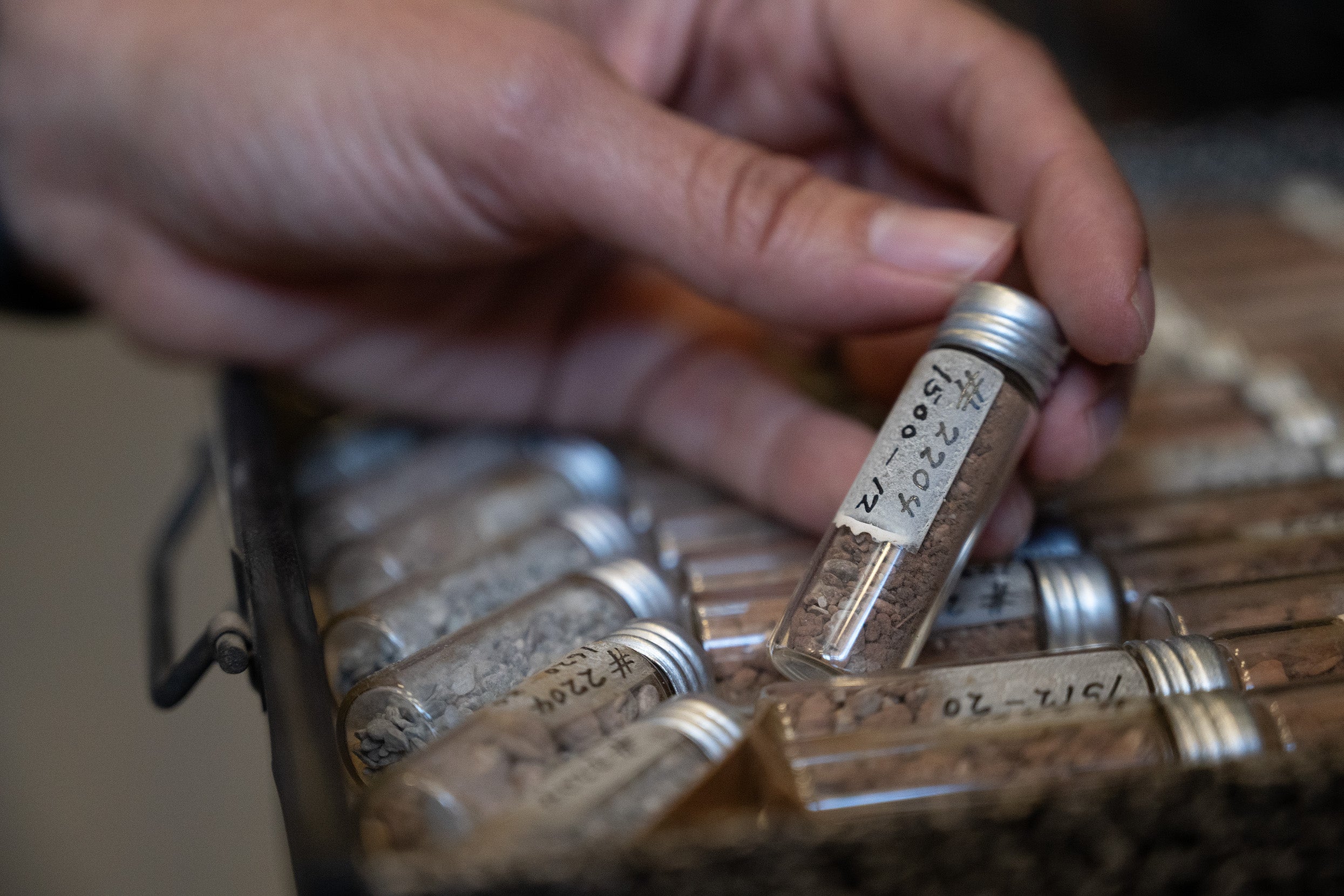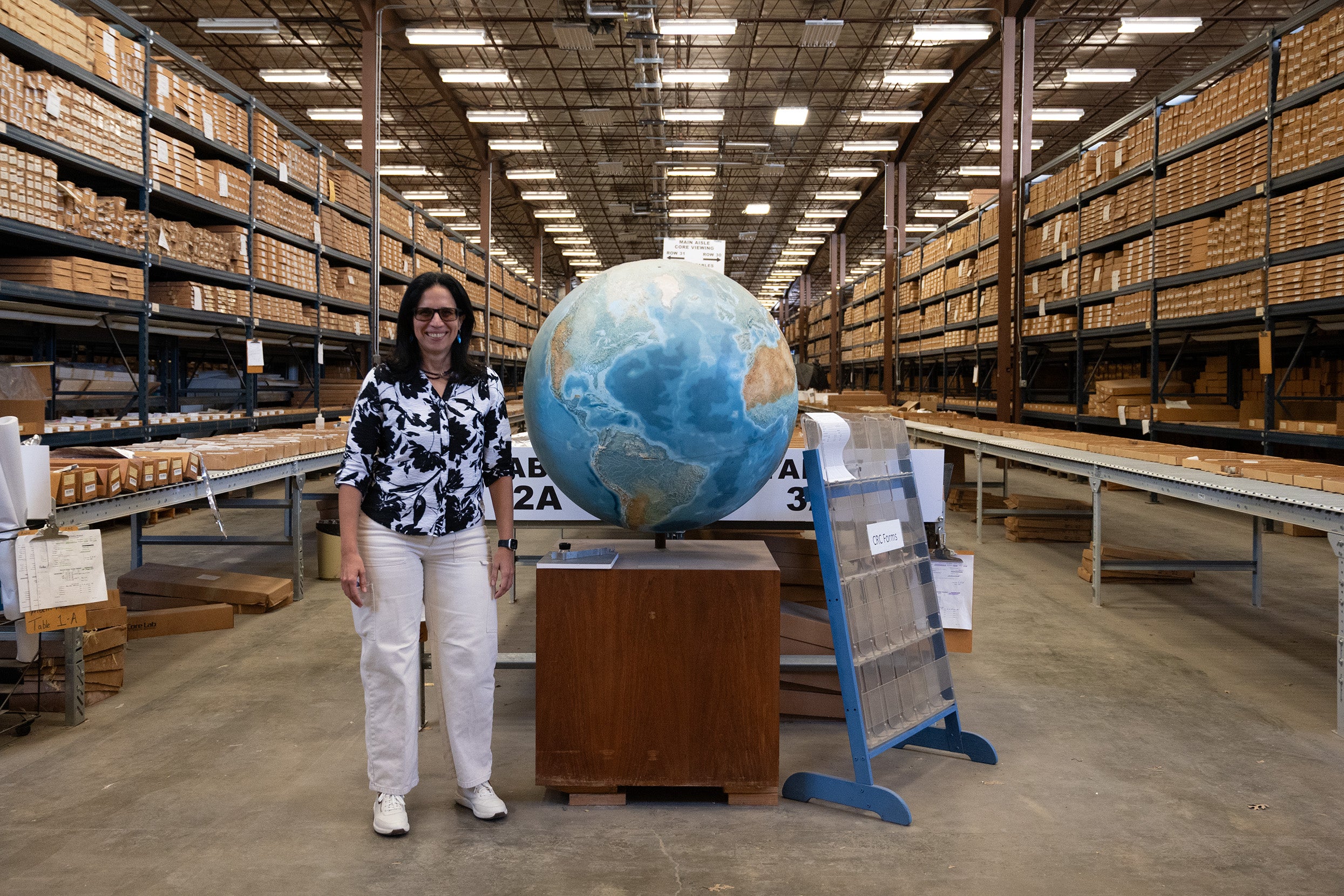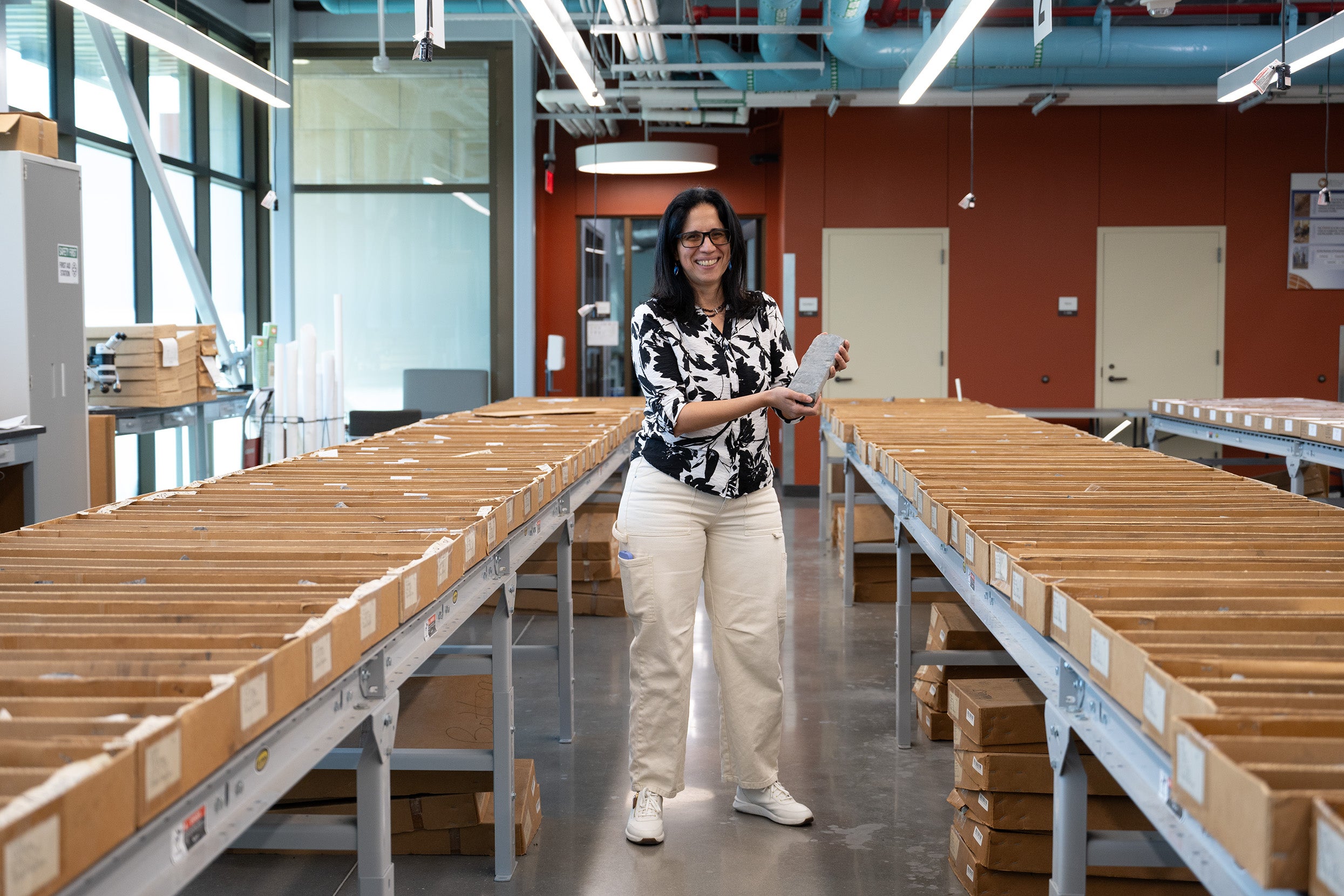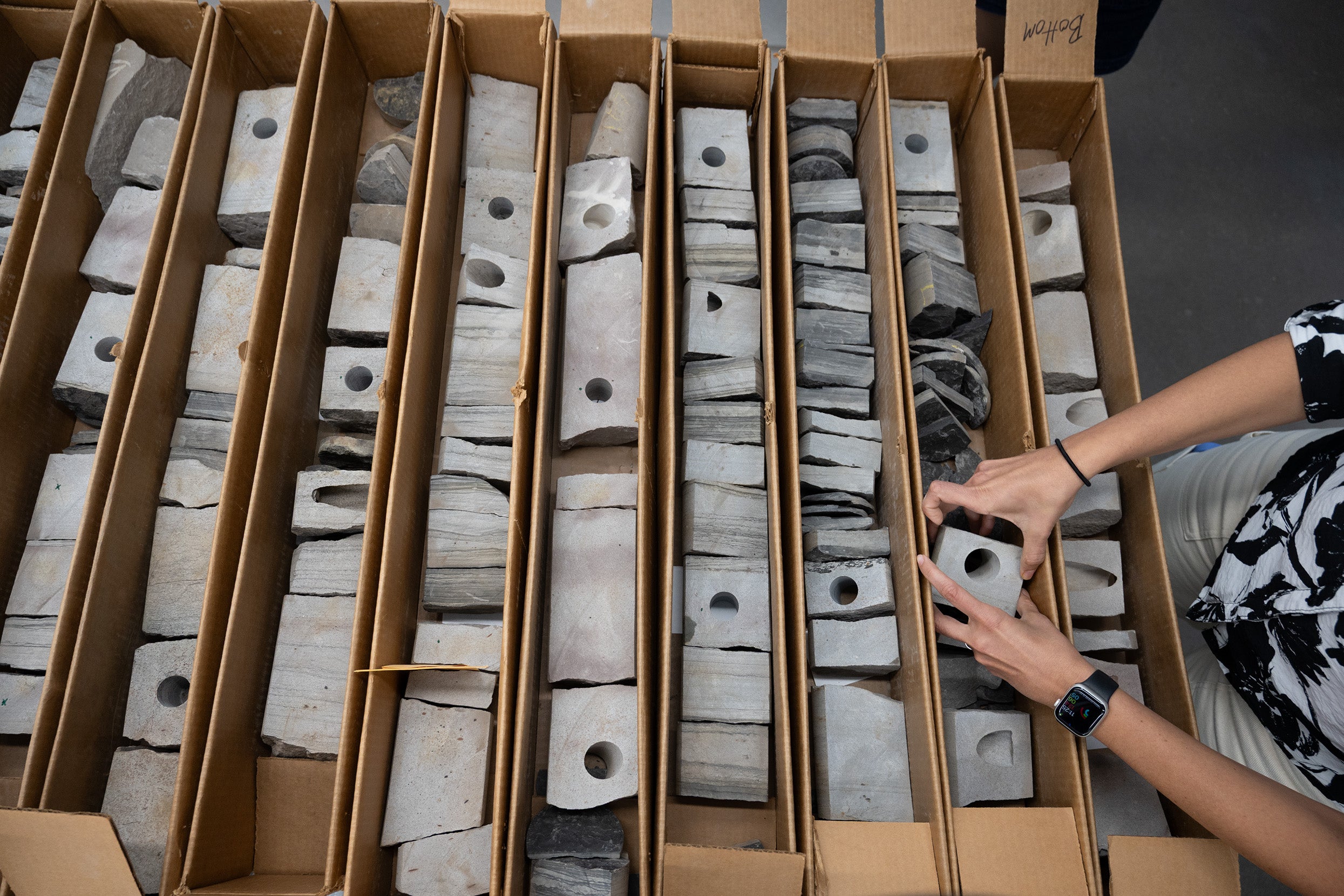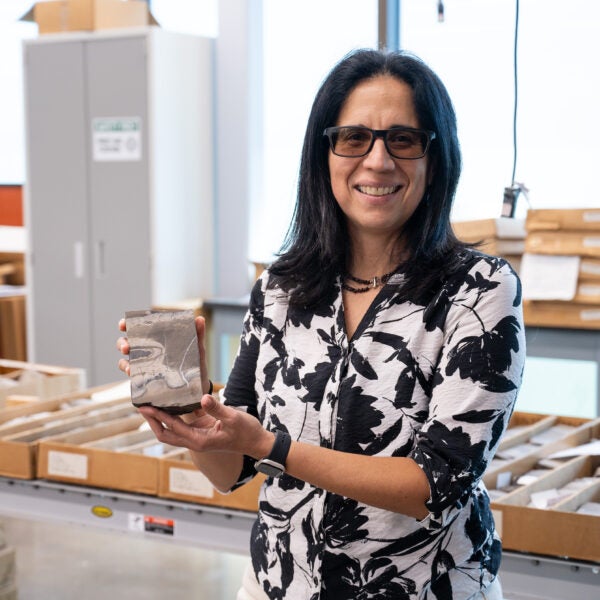
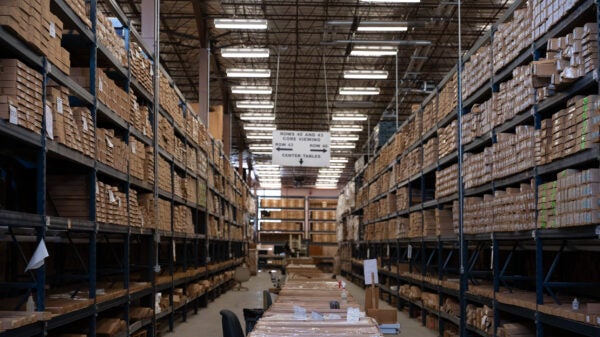
Seemingly endless rows stretch along the massive Austin Core Research Center of the Bureau of Economic Geology. Lorena Moscardelli walks through the corridors, gesturing to various artifacts stacked in carefully organized silver drawers. Moscardelli points out her favorite rock, sandstone, which she feels is fascinating because of the ways it tells a story about the landscape. The collections, all labeled with meticulous detail, tower to the ceiling.
“I think a very colorful way to define the place is … the Indiana Jones archives,” Moscardelli says.
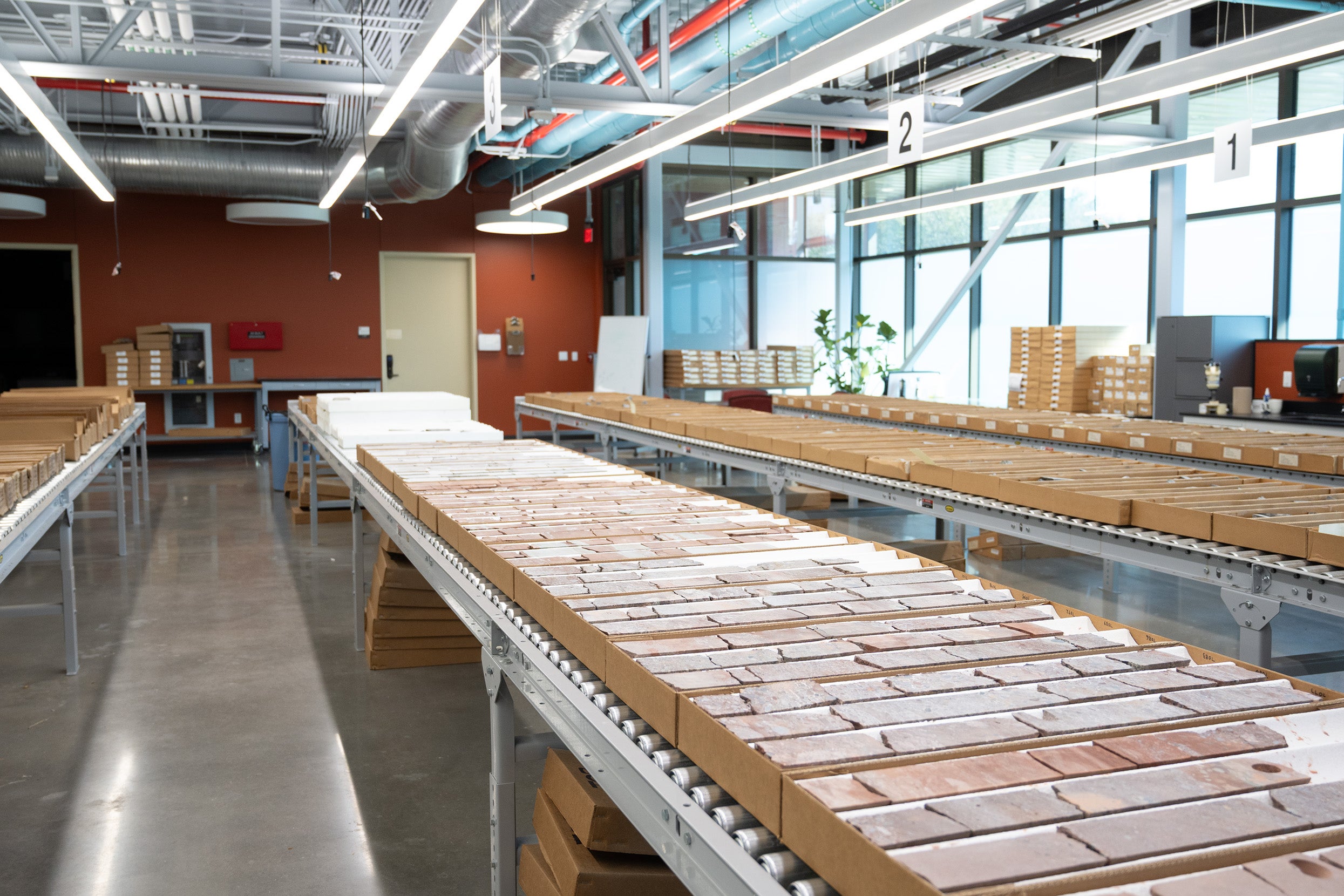
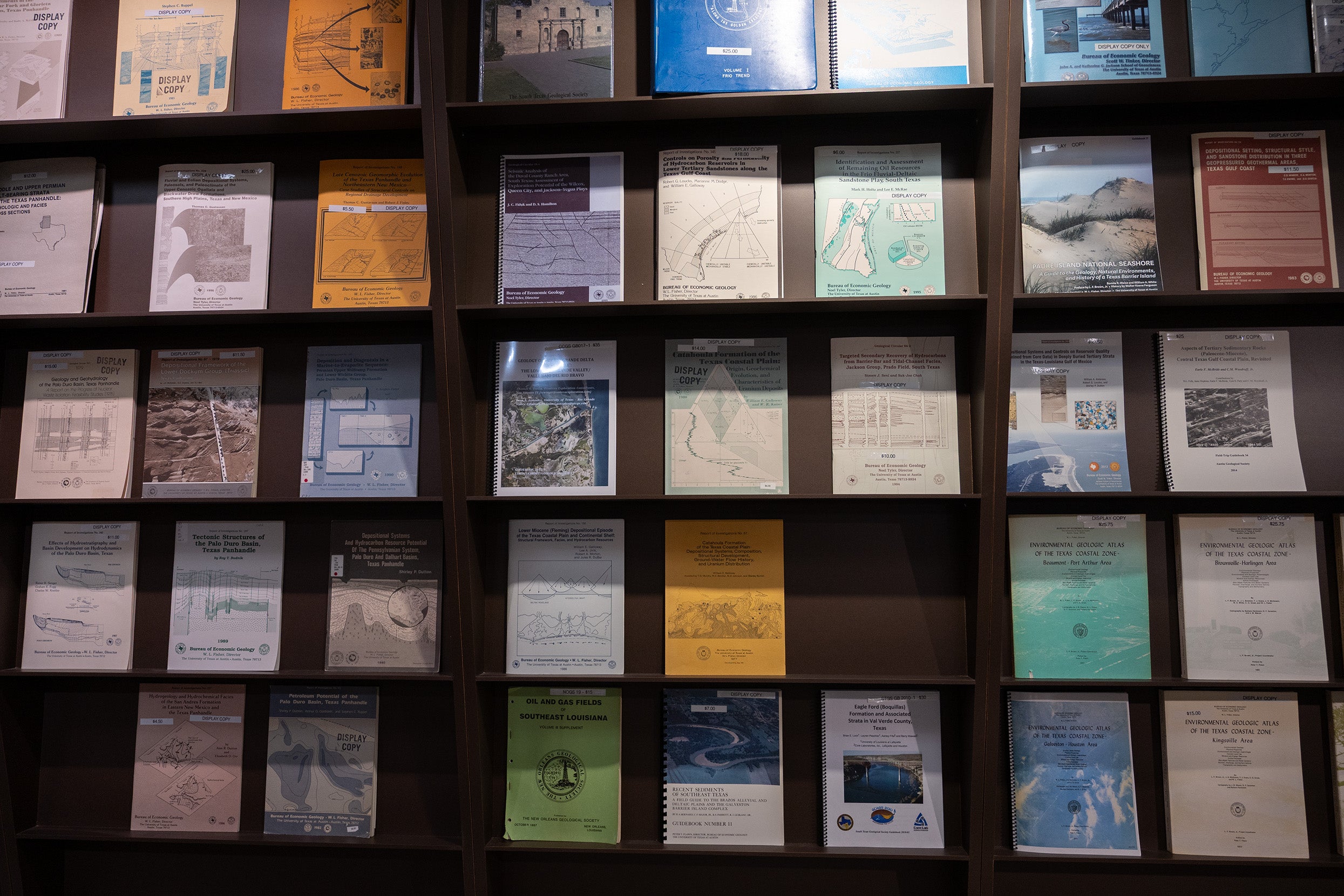
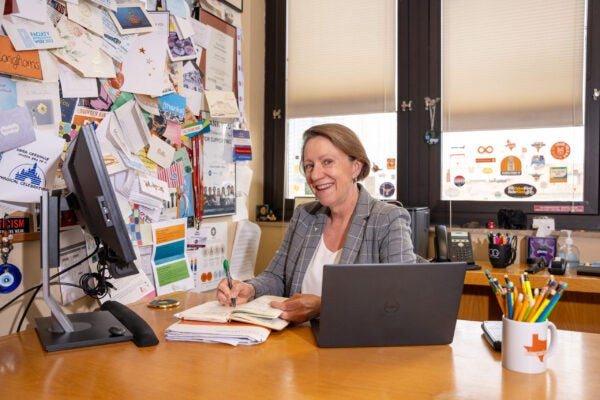
The Austin center is the bureau’s main repository for core and rock materials drilled throughout Texas, the U.S. and the world. The bureau, the oldest research institution at The University of Texas at Austin, was founded in 1909 and conducts geoscience research on energy, environmental and economic issues within the State of Texas and beyond. Moscardelli, the director of the bureau and the State Geologist of Texas, began her tenure in March 2025 after four years as the principal investigator for the State of Texas Advanced Resource Recovery program. Funded by the state, STARR conducts geoscience and engineering research aimed at increasing the production and profitability of earth resources within the state. Moscardelli also holds the Edwin Allday Endowed Chair in Subsurface Geology at the Jackson School of Geosciences.
Samples of rock material from the more than 700,000 boxes stored at the center help researchers unravel the secrets of the subsurface — how geological formations developed over millions of years and their resource potential, from oil and gas to aquifers, minerals and more.
“We have tools that allow us to understand what is happening in the subsurface and to produce predictive models that people can use to extract resources or to use resources in the subsurface,” Moscardelli says.
As director of the bureau, Moscardelli supports ongoing programs such as The Texas Imperative. This initiative encompasses studies of critical minerals and aggregate production, geothermal energy, hydrogen and helium exploration, and groundwater resources in Central Texas.
In addition, the bureau operates TexNet, Texas’ earthquake monitoring network, which includes more than 200 seismic stations deployed across the state to detect and record seismic activity. It also conducts research on many other aspects associated with geohazards, including wildfires, sinkholes and floods.
“I know the bureau very well, and a lot of my time I try to spend talking to researchers and talking about the research initiatives that we were engaged in and we’re planning to engage in the future,” Moscardelli says. “And I always say that one of the missions of the bureau, as also the State Geological Survey of Texas, is to serve society.”
Sustainability, Moscardelli says, lies at the intersection of energy, the environment and economics. She believes that all forms of energy must be part of the solution, as society’s demand continues to grow every day. From wind to oil and everything in between, every resource should be considered.
“More than an energy transition, it’s an energy expansion,” Moscardelli says.
The bureau, at the J.J. Pickle Research Campus, is one among three research units under the Jackson School of Geosciences. The director’s roots in the school, however, run far deeper. Prior to her time at the University, Moscardelli worked as a geologist for the national oil company of Venezuela during the early 2000s, and it was there where she met Lesli Wood, who was then a researcher at UT. Moscardelli says Wood encouraged her to continue her studies in Texas while political turmoil was erupting in Venezuela. During her time as a Ph.D. student in the Jackson School, Moscardelli served as a graduate research assistant at the bureau while pursuing research on submarine landslides. She later went on to serve as a co-founder and co-director of the Quantitative Clastics Laboratory with Wood.
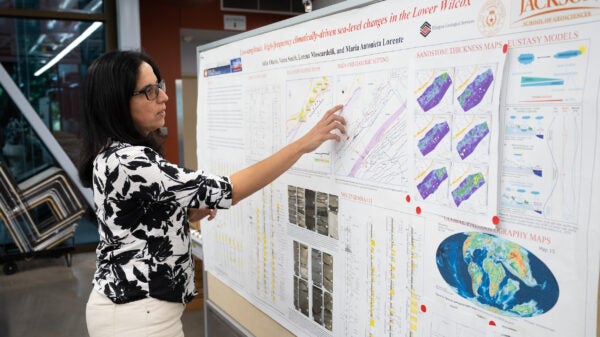
After working in a research capacity at the bureau, Moscardelli worked for the energy company Equinor. The work took her to Norway, where her last assignment saw her working in field development activities in the Norwegian Continental Shelf. After eight years with the company, Moscardelli returned to Texas, this time as the leader of STARR.
In conjunction with leading the bureau, she now serves as the State Geologist of Texas, a dual role that involves research and close cooperation with state leaders and other state agencies.
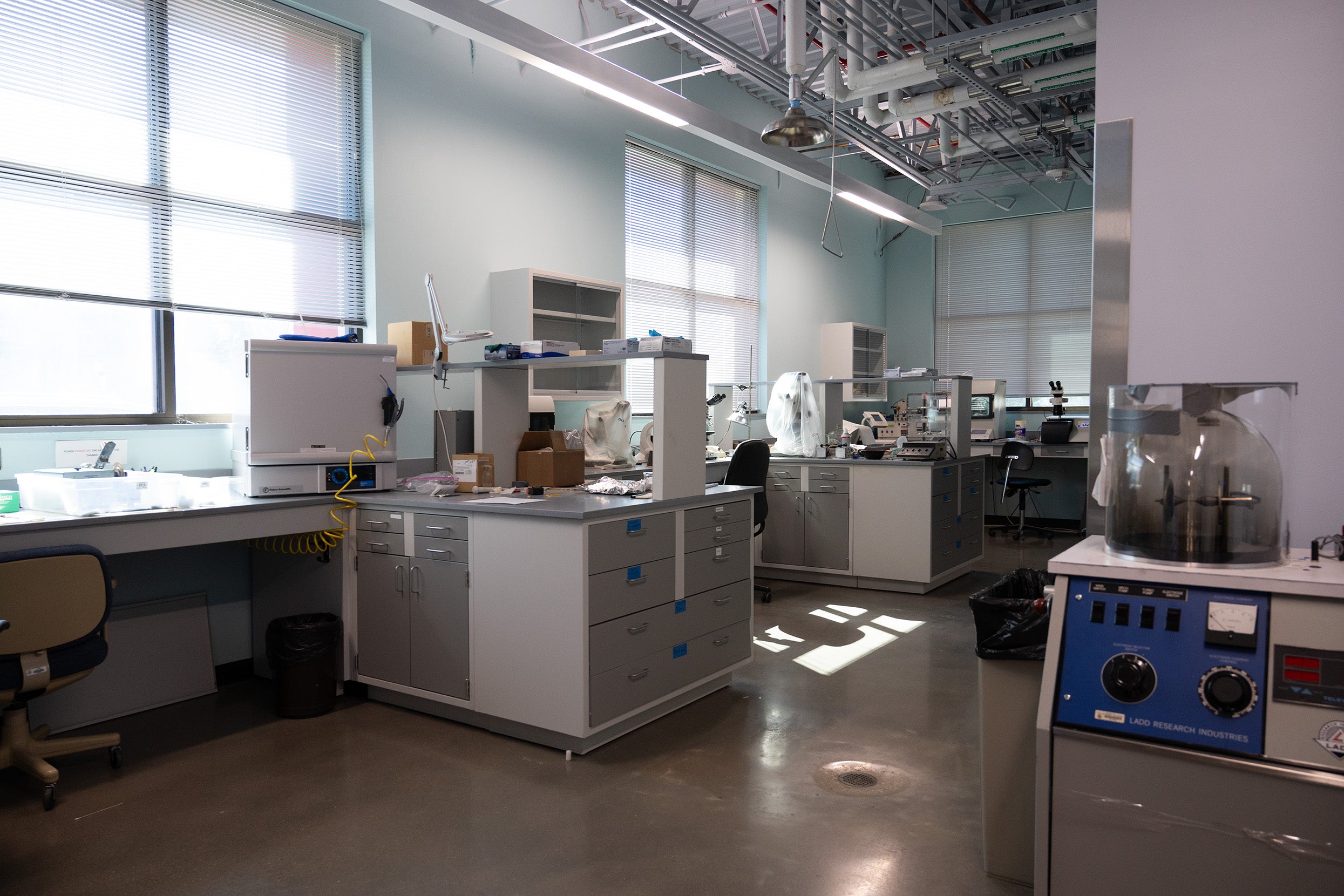
The bureau is funded through a combination of private industry support, federal grants and state line items. Moscardelli notes that the Austin Core Research Center often serves as a key point of connection between bureau researchers and exploration companies across the state, including many smaller operators.
The research conducted at the bureau provides an essential framework for understanding Texas’ natural resources, she says. It also fosters a productive feedback loop among researchers, industry partners and state stakeholders, helping to expand and refine knowledge about the state’s natural resources. And involving students in applied research, such as the work conducted at the bureau, is essential for preparing the next generation of the workforce, Moscardelli says.
In stepping into the role, Moscardelli is the first woman to serve as director. After two decades at the bureau, she feels honored to be tasked with the “huge responsibility” of running this vital organization.
“I’m the ninth director of the bureau in 115 years. For me, to be honest, it felt as a natural transition, given that, as I have shared with you, I am a child of the bureau,” Moscardelli says.