Every gift to The University of Texas at Austin begins with a belief: what starts here changes the world.
That shared belief fueled the What Starts Here campaign — an effort that set out to raise $6 billion over 10 years and ultimately redefined what’s possible. With more than $7 billion in gifts from more than 350,000 alumni and friends, it stands as the largest fundraising campaign in the University’s history and among the most successful in public higher education.
The impact is visible across the Forty Acres. More than $1.4 billion has expanded access and opportunity for students. Investments totaling $3.5 billion in programs are preparing graduates to meet the world’s most pressing challenges. More than $1 billion in research support is driving discoveries that will shape the future of Texas and beyond. And with another $1 billion invested in campus spaces — from the UT Dell Campus for Advanced Research to the restoration of the iconic Tower — philanthropy is transforming the Forty Acres itself.
Behind every number are the people who make it possible. Texas Development staff across the University connect donors with opportunities that change lives every day. Here, three team members share what drives their work — and the impact they help create.
Making donors feel a part of the UT family
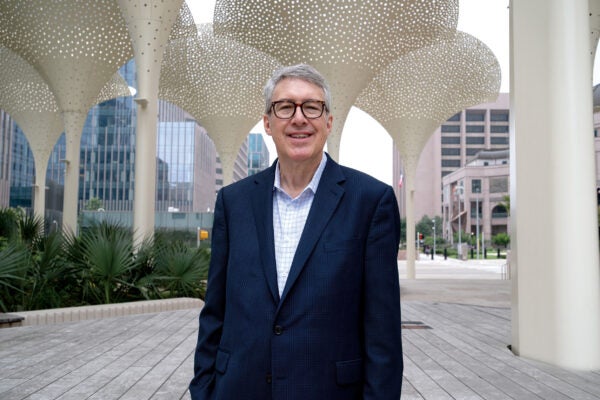
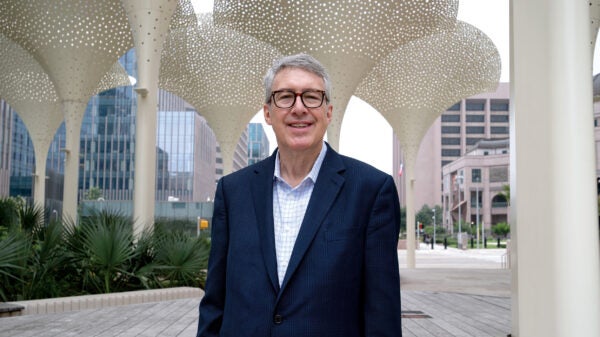
Long before calling The University of Texas at Austin his “adopted alma mater,” Jeff Glosser was deeply woven into the Longhorn community. Married to a UT graduate and a father of two alumni, he says the past 28 years in development have been nothing short of gratifying.
As executive director of gift and estate planning for Texas Development, Glosser connects donors’ passions to the greatest needs of the colleges and units that he and his team support. With a background in personal trust banking, he joined the department just one month into the “We’re Texas” campaign and has since worked through all three of the UT capital campaigns.
Glosser and his team focus on serving as a bridge between potential donors and the support of various colleges, schools and centers on campus, such as the College of Fine Arts, the School of Architecture, the Blanton Museum of Art and the Harry Ransom Center.
“It’s a mutually satisfying process when there is so much trust in us as an institution both philanthropically and personally,” Glosser says. “It’s an honor and a privilege to work with people who are making such a difference.”
Glosser’s personal ties to UT are something he says has helped foster growth in engagement from donors who aren’t alumni. He ensures each conversation reflects a broader impact within the arts and humanities while highlighting the emphasis on student support through the “What Starts Here” campaign.
“That’s a message that really hits home,” Glosser says. “Making a difference for students who otherwise wouldn’t be able to attend UT.”
In a way, when people make these kinds of gifts, they’re treating UT like part of their family.
Although his daily responsibilities have remained consistent across the campaigns he’s been involved with, each one has taught him how to communicate its goals with clarity and intention. The common thread for Glosser is his commitment to building genuine, long-lasting connections with those who contribute to UT in any capacity.
“It’s sit-down conversations with people in their homes or offices, getting to know what’s most important to them and then trying to come up with a customized solution that is most effective,” Glosser says.
The conversations don’t end once a gift is made. Glosser makes a point to stay connected long after, reaching out for birthdays and checking in just to see how someone is doing, he says. The gestures he and his team extend to donors prioritize personal, heartfelt touches.
“It’s that sense of deep trust,” Glosser says. “In a way, when people make these kinds of gifts, they’re treating UT like part of their family.”
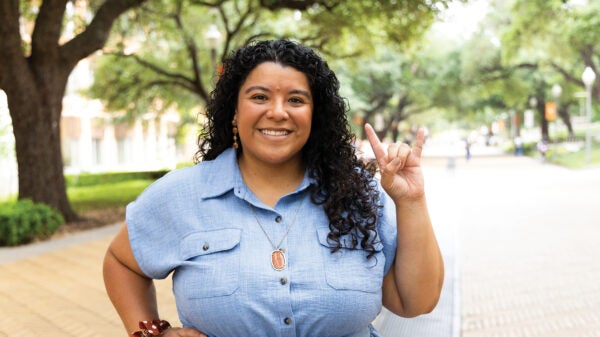
From first-gen student to scholarship donor
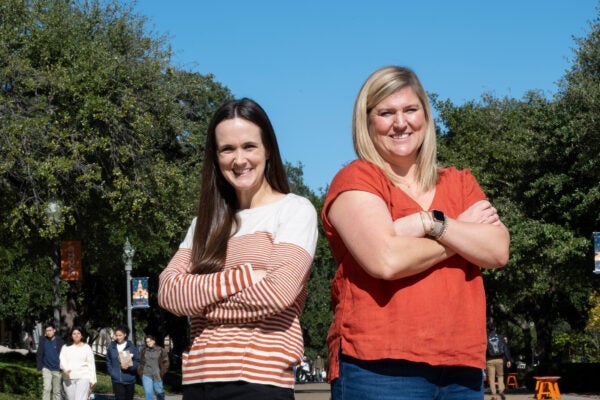
As a first-generation college student, Deidra Garcia’s lived experience with scholarship aid drives her mission every day. Her approach to development work is grounded in understanding how opportunity can change a student’s future for the better.
“For me, it’s knowing firsthand what it can do for your life and your family’s life,” Garcia says. “I think I bring that in the work I do. Even on hard days or long weeks, it’s a constant reminder.”
Garcia’s introduction to the world of development began when she worked as a student caller to earn extra spending money while studying in the Cockrell School of Engineering. She says that while she cold-called alumni “right at dinner time as they were sitting down with their families,” she would update them on the University’s goals, asking for a gift at the end of each conversation.
Those calls, she says, made her realize that many of the opportunities she had were possible because others had invested in students like her. This instilled her interest in the development field and the impact that can be made through philanthropy. Through her experiences as a student manager, development associate and now director of development for The University of Texas at Austin, her passion for representing UT has grown into helping others leave their mark.
“This is another relationship in your life,” Garcia says. “Just like you have your families and your co-workers, you have your alma mater.”
As she approaches a decade in development, she continues working to expand opportunities for students who would not be able to pursue education without financial support. Garcia says her framework with donors relies on active listening, with an endless curiosity to learn about their “why.”
“It’s always been about focusing on their stories, being grateful to play a small part in that lifelong relationship,” Garcia says.
Development officers are not just doing the work but living it.
Garcia’s team has focused primarily on The Texas Challenge the past six years, aligning with the development-wide emphasis on scholarship support. The program allows UT to match scholarships above a certain threshold dollar for dollar, doubling their impact.
Some of the most meaningful moments for Garcia have been with donors who wish to acknowledge the people in their lives who made it all possible. She’s carried that sense of gratitude into her personal gifts, too. She and her fiancé recently created their own scholarship in honor of her parents, who did not have the opportunity to attend college.
Learning from colleagues who give their time and resources to bettering UT continues to inspire Garcia, she says.
“That’s the thing that’s stayed with me,” Garcia says. “Development officers are not just doing the work but living it. We truly work with people who care and are passionate about making an impact.”
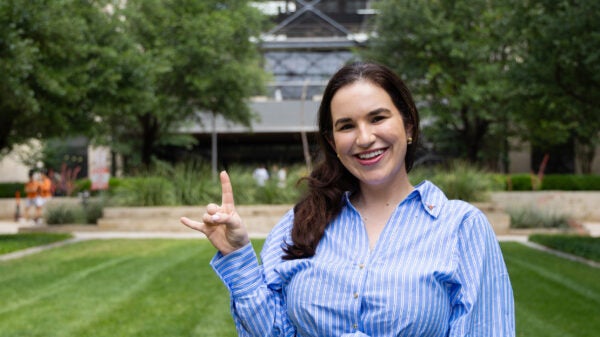
Finding ways to honor and celebrate donors
For Anna Zodin Faulkner, being a director of stewardship and strategic events means acknowledging every gift that comes through the door. Her goal in development is to share the impact of the investment with creativity, attention to detail and genuine celebration
Seeking work that felt more connected to her passions, Faulkner came to The University of Texas at Austin in 2019 with a background in marketing and event planning. She currently serves within the Cockrell School of Engineering development office, where she manages donor relations and engagement. In that role, she sees how contributor generosity makes an impact.
“We are blessed at the Cockrell School to have incredibly generous donors who have big visions beyond themselves,” Faulkner says. “I’m lucky to be in that orbit and share the impact.”
Growing up in Austin, Faulkner says being exposed to philanthropic efforts subconsciously inspired her career aspirations. Being surrounded by spaces built in honor of people passionate about giving back shaped her view of education.
“I believe education is the greatest equalizer,” Faulkner says. “It’s something I’ve been blessed to have, and I feel really lucky. I think it’s what moves me so much about development.”
Faulkner’s stewardship practices come from an appreciation for celebration that defined her childhood and family life.
“We just would celebrate life, which I still just love to do,” Faulkner says. “Whether it’s big or small, it’s meaningful to remember and acknowledge things in people’s lives.”
The things that land the best with our donors is when it isn’t expensive — it’s just thoughtful.
Being creative while staying mindful of logistics and efficient ways to allocate funds is what often leads to events that exceed expectations, she says.
“The things that land the best with our donors is when it isn’t expensive — it’s just thoughtful,” Faulkner says. “I always aim for that.”
Faulkner says she tries her best to “be a sponge” to absorb the details that matter most to donors and their stories.
“We always want to surprise and delight,” Faulkner says. “We have to be conscious of the bottom line, but we have to deliver the best of the best experience.”
Faulkner says the true work is showcasing the impact of a significant gift with the level of thoroughness needed in development. She says displaying the weight of someone’s generosity has been one of the most fulfilling parts of the job.
“If we can’t talk about the impact in a tangible way from both a numbers and story perspective, then we’re failing,” Faulkner says.
As the “What Starts Here” campaign comes to a close, Faulkner’s attention is on ensuring sustainable and equitable results, she says. She’s consistently thinking about how to carry its impact forward.
“It’s exciting to think about the end of the campaign and what it looks like to really honor donors,” Faulkner says. “Now is when stewardship needs to rise up. The work isn’t done.”