
“Friends, Romans, country people,” Clayton Stromberger calls out to a class of ready-to-learn fifth graders.
“Lend me your ears,” they shout back in unison.
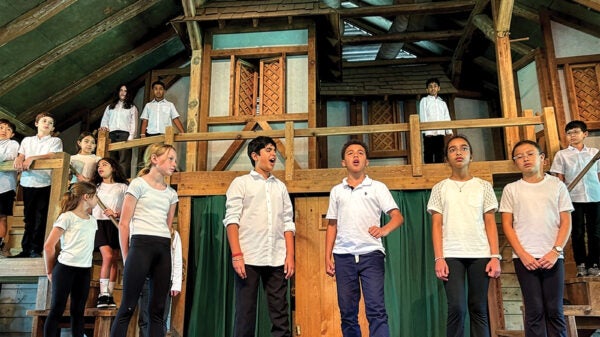
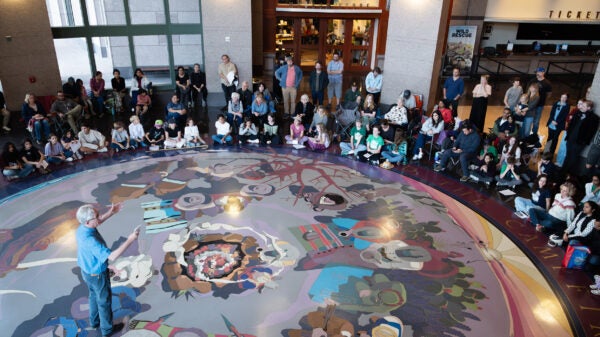
The Shakespeare at Winedale Outreach program began in 2003 when Clayton Stromberger was hired as the first outreach coordinator for the University’s long-running Shakespeare program. In this role, Stromberger works with elementary students throughout Austin and the surrounding areas, guiding them as they learn to perform the classic works. He has visited 37 different schools over 23 years, growing Shakespeare into what he deems “a treasured tradition” in many classrooms.
“From the research I’ve done, my job is a one-of-a-kind job,” Stromberger says. “As far as I know in the country, there’s no other university-based Shakespeare in the schools program that goes into public schools.”
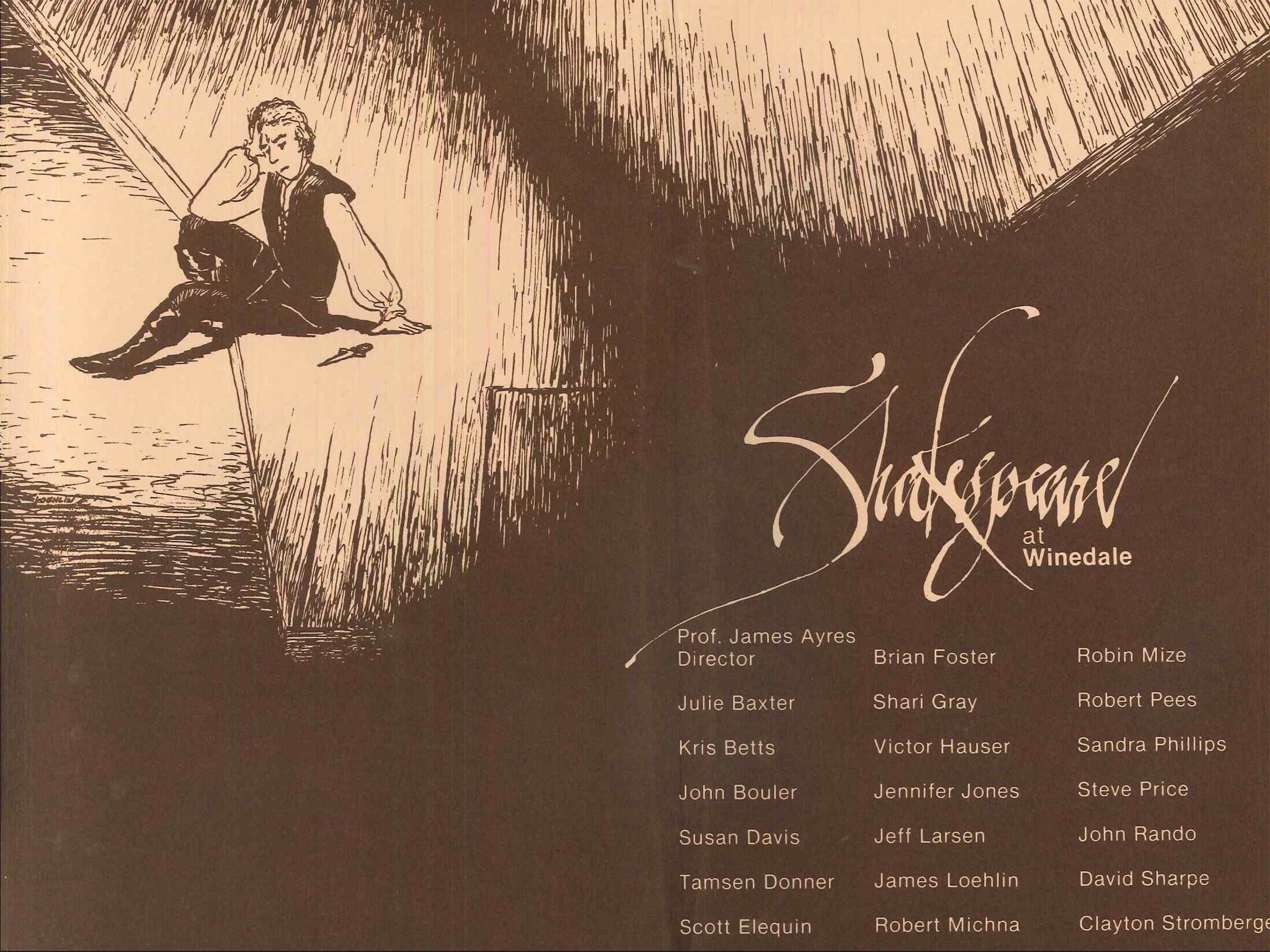
The students memorize lines and participate in a series of performances at different venues. In the past, this has included retirement communities, school performances and the much-anticipated Festival of Play in April. That’s put on at the 250-acre University of Texas Winedale Historical Center near Round Top, where the college-age program also holds performances in the spring and summer.
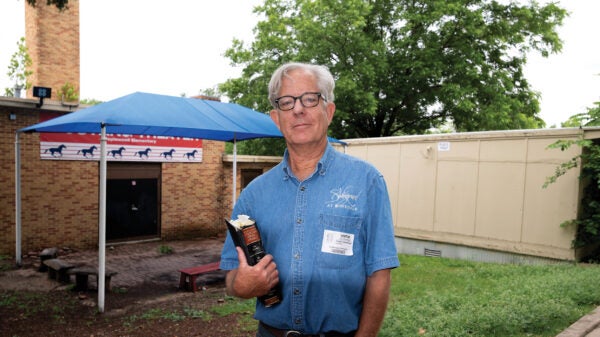
Shakespeare at Winedale started in 1970, when professor James B. Ayres began taking UT students to Winedale to explore Shakespeare through performance. Stromberger was one of those students in 1983.
“I just sort of stumbled into it on the recommendation of a friend,” Stromberger says. “My plan was to go into magazine journalism. I had worked at the (Austin American-) Statesman, and I was not a Shakespeare guy at all.”
Despite not having a propensity for Shakespeare before the Winedale program, Stromberger enjoyed the course so much he opted to take it again the following summer.
“I had applied for a magazine internship at Newsweek, and then I didn’t make the final cut,” Stromberger says. “So, I thought, ‘OK, well, I’ll do this Winedale thing.’”
Two years later, a friend from the program invited Stromberger to join The Shakespeare Encounter, a small troupe that visited high schools and performed 45 minutes’ worth of scenes.
“We were just crazy to do more Shakespeare,” Stromberger says.
As he continued to act, Stromberger became The Shakespeare Encounter’s workshop director and later returned to Winedale to assist in teaching the program’s summer course.
Stromberger moved to Seattle in 1990 to pursue theater directing. He met a fifth grade teacher who invited him to teach Shakespeare as an artist in residence at Ardmore Elementary. Stromberger says this is when he knew he wanted to pursue this passion for teaching Shakespeare.
“To them, the poetry was kind of like Dr. Seuss. It was kind of fun,” Stromberger says. “They also had such fresh, creative ideas about the characters.”
In 1994, Stromberger and his wife moved back to Austin, where he worked as an elementary school teacher for six years. Eventually, he found his way back to Winedale when Ayres invited him to create the outreach program. In 2003, James Loehlin, then the new director of Shakespeare at Winedale, secured a kickstart grant from the Houston Endowment that enabled the idea to become a reality
Stromberger has served as the outreach program coordinator through UT’s English Department ever since and, like Shakespeare, now has many fans.
“It just brings joy to my heart,” says Tara Stine, a fifth grade teacher at Maplewood Elementary in Austin. “He has such a lighthearted approach to gathering their attention, and to guiding them, to encouraging them, to bringing them out of their shell, or to help them step back and let somebody else take the role.”
Nora Keane is a parent of a sixth grade student who has been with the outreach program since fourth grade. She says her son has grown to appreciate Shakespeare and come out of his shell since joining.
“He’s enjoyed exploring, being louder and having more external emotions through the scenes he’s playing, which is a little bit not natural for him,” Keane says. “It’s not just confidence. It’s a little bit of a better understanding of his own character.”
Mahesh Balasubramanian, another parent whose daughter has been with the outreach program for two years, speaks highly of Stromberger’s ability to explain the complex language to a younger audience.
“He does not just give the lines to the kids,” Balasubramanian says. “He actually explains the context of what that is so that they understand the emotion that they need to be portraying.”
Stromberger does not speak of his ability to teach, but rather the ability of his students to understand the rich language.
“It was amazing to me how some of them just took to the language, like ducks to water,” he says.
Fifth grade student Margot Hill started the outreach program this year, following in the steps of her older sister who participated two years ago. She played Hermia in an excerpted performance of “A Midsummer Night’s Dream.” Margot says her favorite part is deciphering what the text is trying to say.
“It’s very interesting to picture it in your head,” Margot says. “At first it’s kind of confusing, but once you know the story it feels better.”
Stromberger likes to keep this bigger picture in mind as he teaches. To him, Shakespeare is more than just an art form.
“My goal isn’t really that they all fall in love with Shakespeare,” Stromberger says. Instead, he sees it as a social-emotional learning opportunity.
“A lot of us in this field of Shakespeare and education talk about Shakespeare as the vehicle, not the destination,” Stromberger says. “We’re trying to use the vehicle to give the kids an opportunity to grow in ways the testing machinery doesn’t allow them to.”
Stine, who has been at Maplewood Elementary since the program first visited the school in 2014, recognizes the greater impact the program has on its students.
“It’s that richness that it brings — that’ll never go away,” Stine says. “They’ll always have it. And it’s just wonderful to be able to offer them that.”
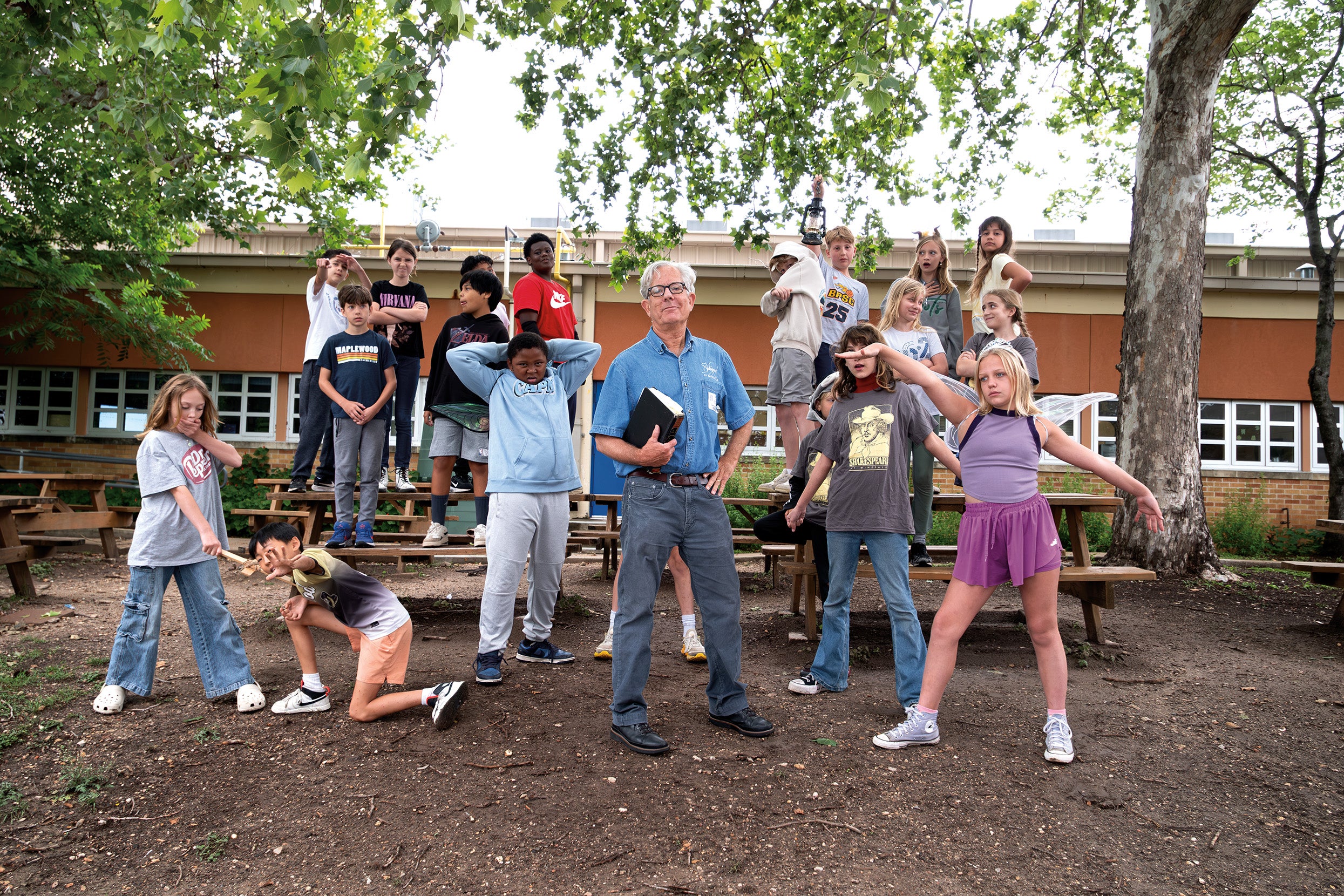
Stromberger with students at Maplewood Elementary. Photo by Izabella Hernandez
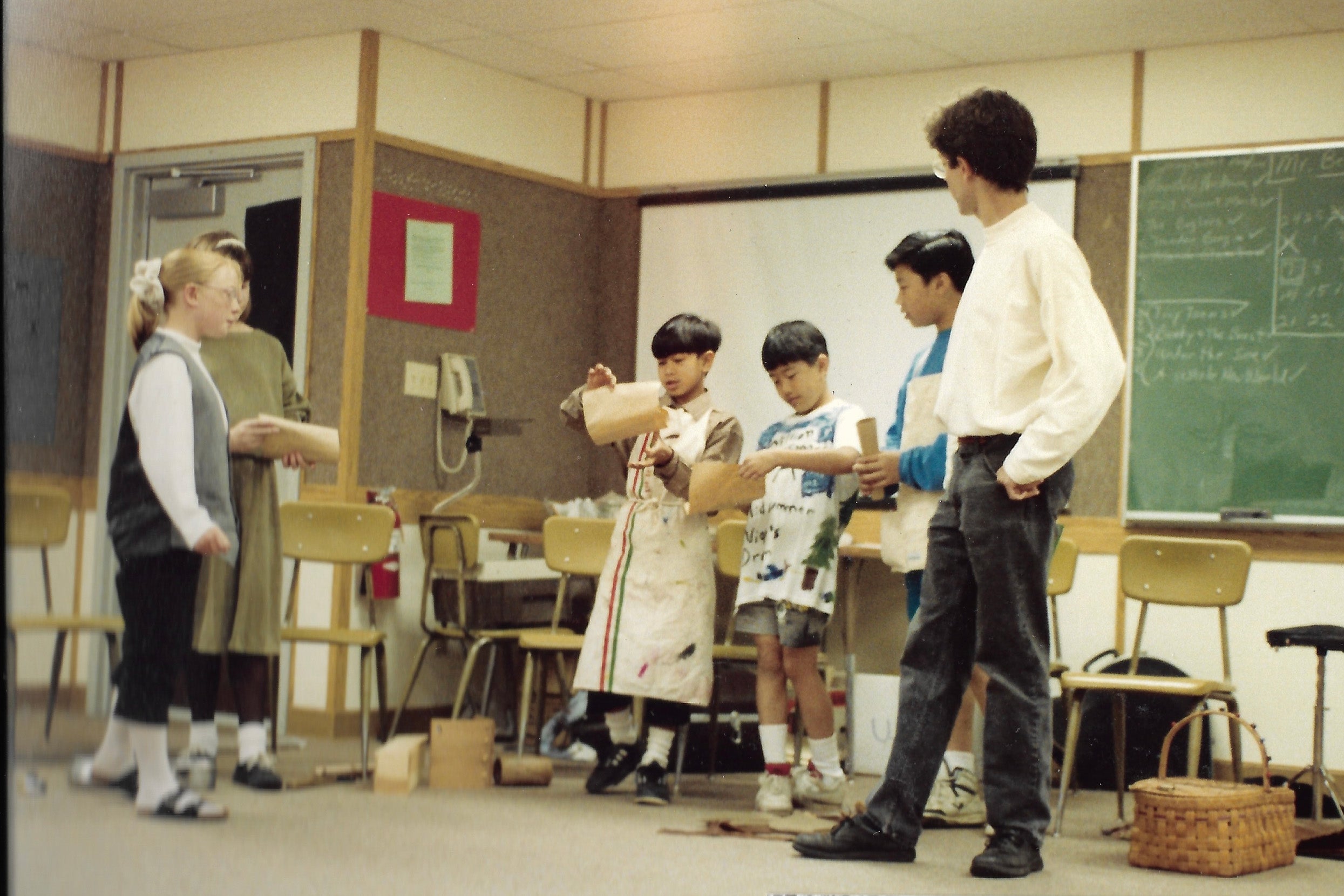
Stromberger with students at Ardmore Elementary in 1992. Photo courtesy of Clayton Stromberger
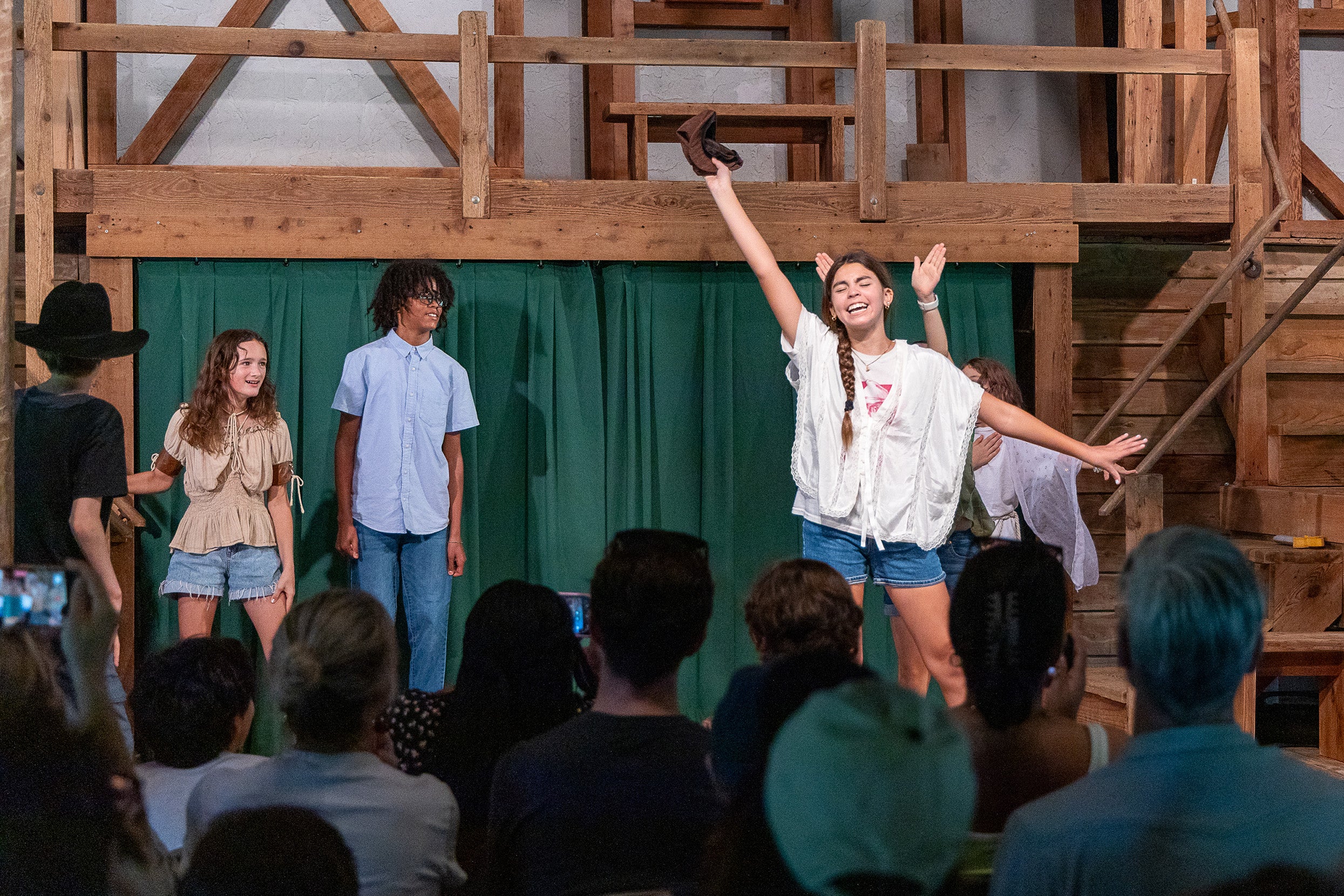
Maplewood Festival of Play 2026. Photo courtesy of Clayton Stromberger
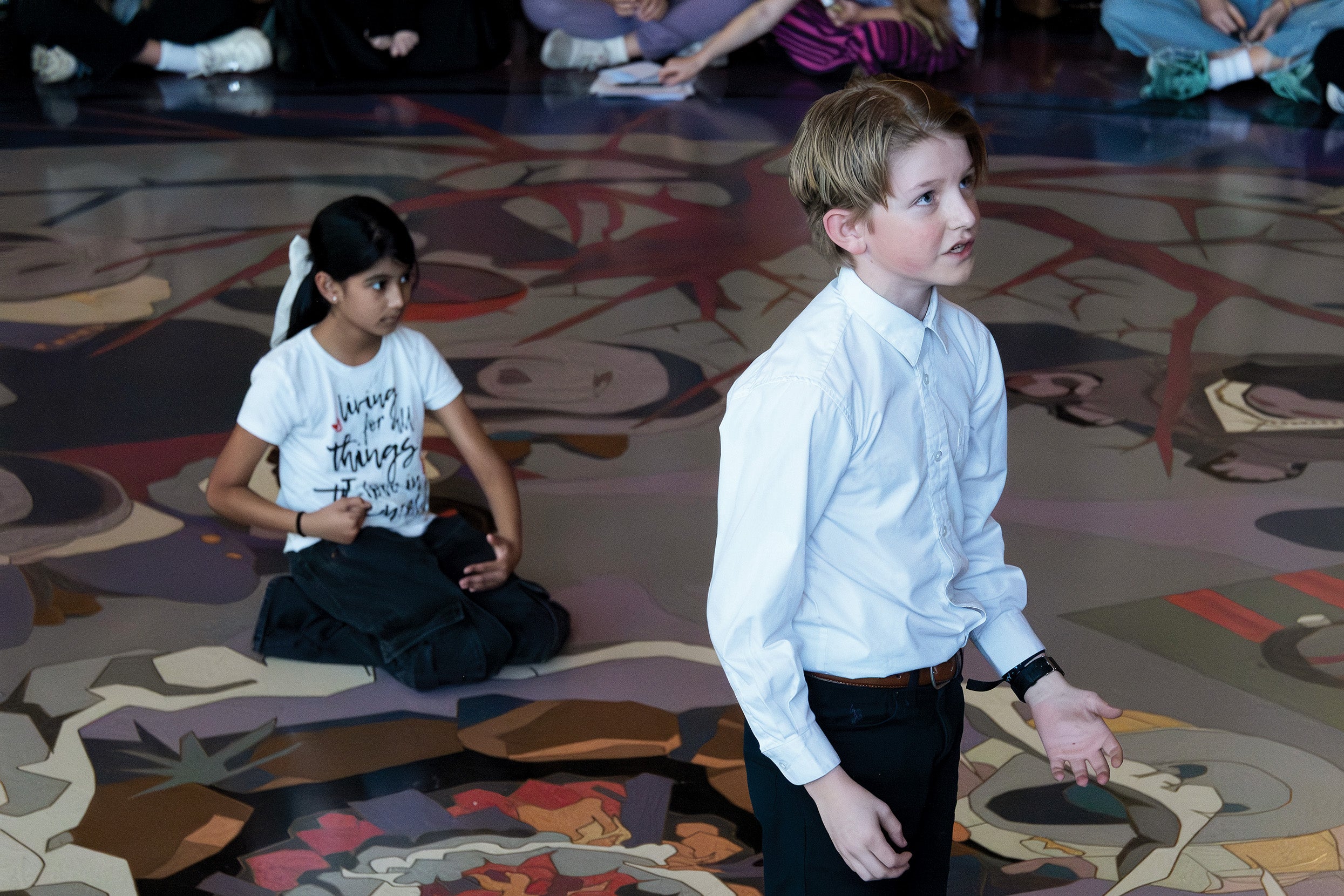
Photo by Izabella Hernandez
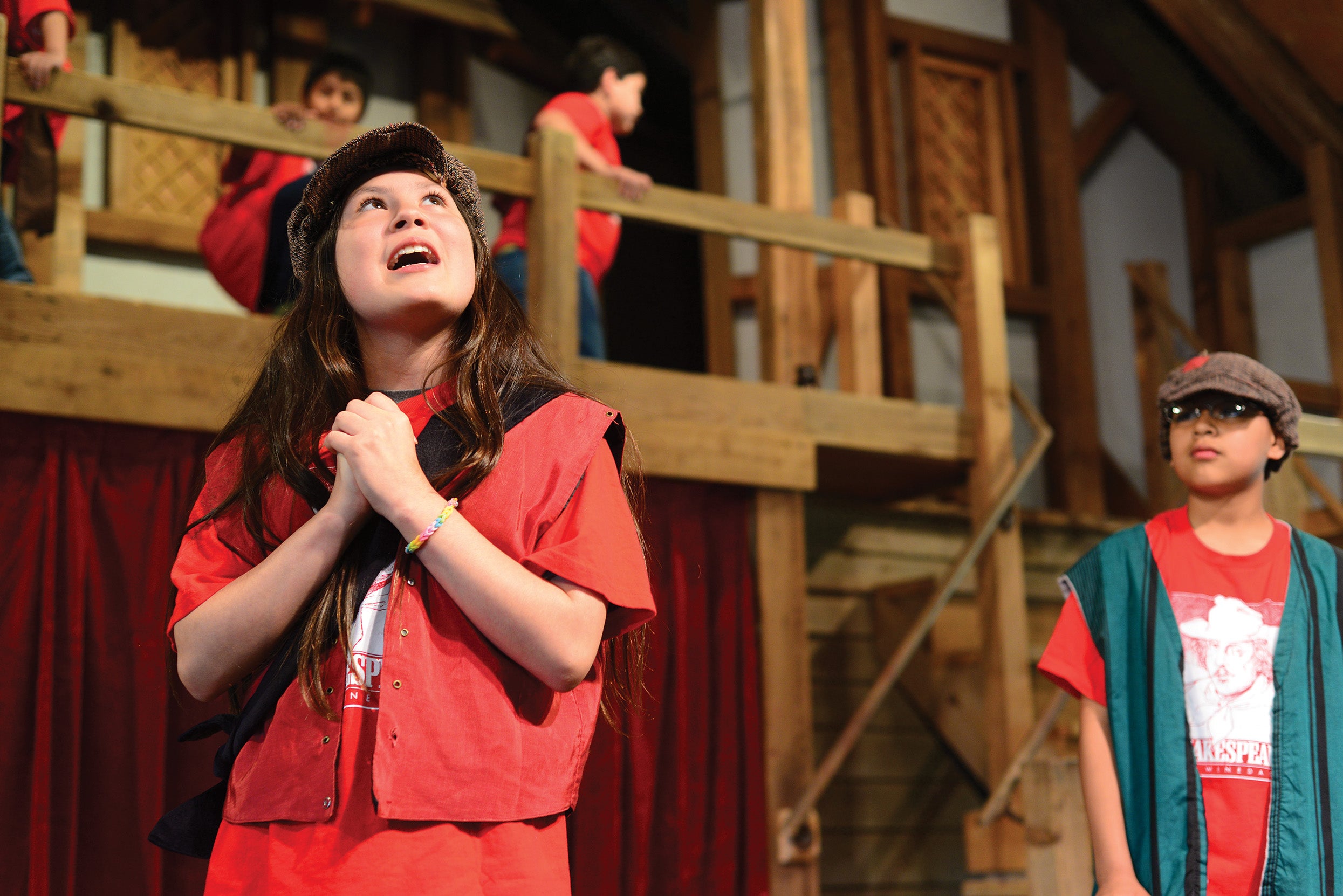
Photo courtesy of Clayton Stromberger
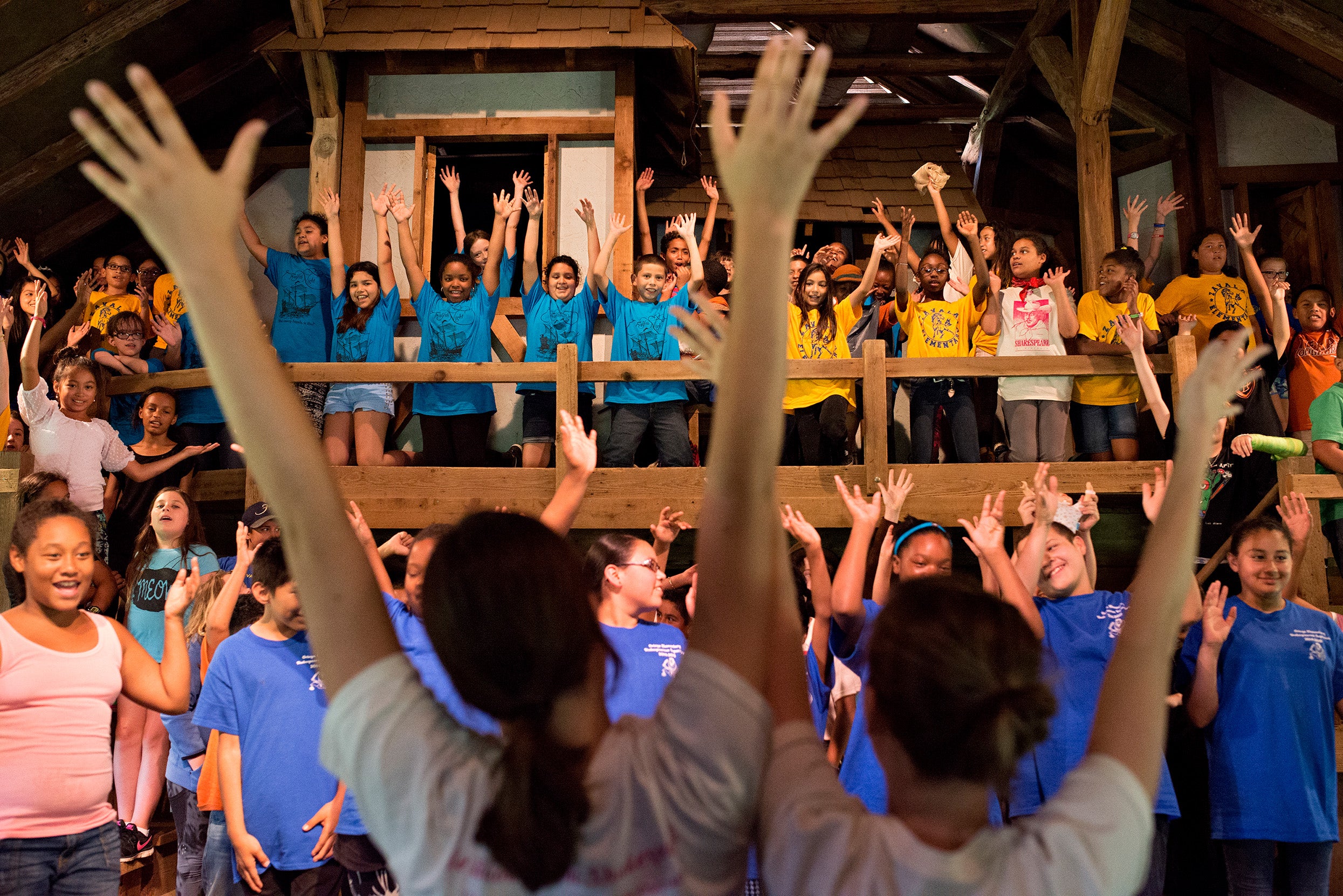
Photo courtesy of Clayton Stromberger