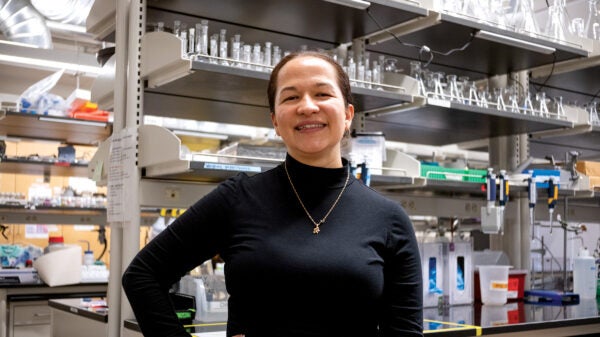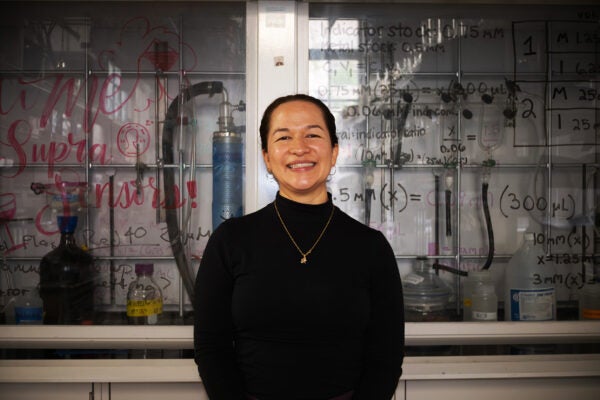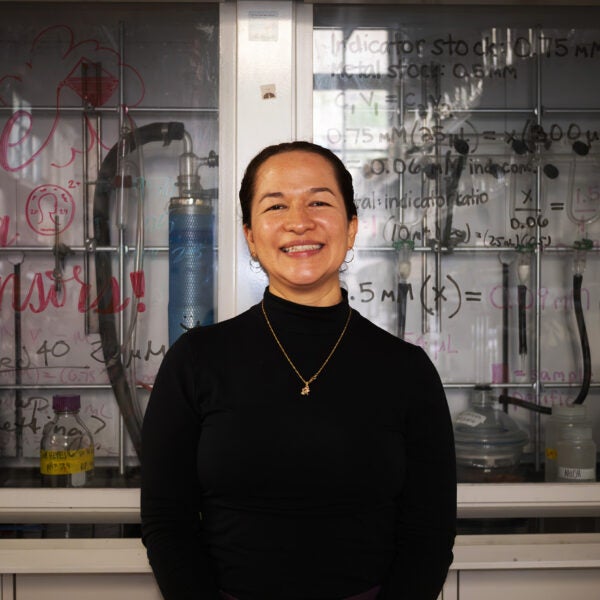
On the fifth floor of Painter Hall, students involved with the UT Wine Initiative use sensing methods that mimic human tongue receptors to detect and classify wine samples.
It’s just another day in the lab, but the work continues to drive associate director Diana Zamora-Olivares, who has spent the past decade helping students gain meaningful research experience.
“The most fulfilling part is seeing my students grow as scientists,” Zamora-Olivares says.
The UT Wine Initiative falls under the College of Natural Sciences Freshman Research Initiative (FRI), where undergraduate students dive into research areas, known as streams, that spark their interest. When it first launched in 2005, FRI streams were mainly chemistry-based. Today, there are more than 30 streams across departments within the College of Natural Sciences. The differential sensing of wine is part of Zamora-Olivares’ Supra Sensors stream.
In one of the pilot FRI streams, professor Eric Anslyn and his students pioneered a receptor platform designed to mimic human taste and smell. Anslyn’s goal of testing the sensors on a complex sample naturally led him to wine. The research began with a collaboration with faculty from the University of California, Davis, and has grown significantly over the years.
Zamora-Olivares, now an associate professor of practice, joined the stream in 2016. Her first project examined genetically identical pinot noirs.
“All pinot noirs come from the same root stock,” she says. “The only difference is the region they were planted along the California coast, which makes them taste different. We found our method is actually sensitive enough to distinguish them.”
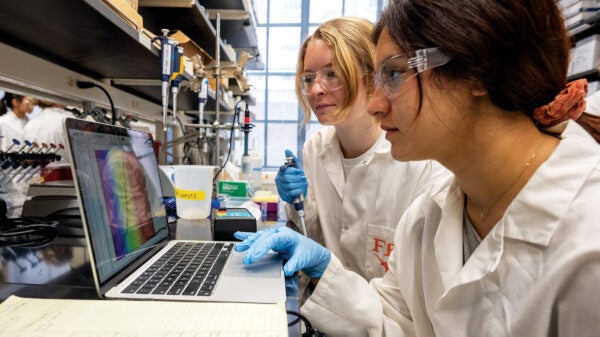
The findings were later published in the journal Food Chemistry. Zamora-Olivares has since presented at the American Society of Enology and Viticulture and the International Symposium of Grapevine Epidemic Diseases, and she currently has a manuscript under review from a collaboration with Texas A&M University faculty.
In 2018, development staff within CNS reached out to Zamora-Olivares and other faculty after several Texas wineries expressed interest in the research. Soon after, a meeting was scheduled to explore what a collaboration might look like.
“They wanted to get us involved,” she says. “We brainstormed switching gears from the robust work established with UC Davis to bringing the collaboration to Texas. Let’s help our community here as much as we can.”
Research conducted in collaboration with the Texas wine industry provides classifications such as varieties, blends, hang time on vines, year of harvest and more. This information is then used to study how conditions and geographic locations can influence aging, aroma, flavor and the wine’s overall quality.
Zamora-Olivares decided to take on the UT Wine Initiative within her undergraduate Supra Sensor research lab, where she serves as co-director under Anslyn.
“Scientifically, she’s fantastic,” Anslyn says. “Being interactive and jovial and bubbly makes her a perfect person to inspire younger generations about science.”
Zamora-Olivares brings that combination of skill and an approachable energy to her collaboration with partners across the program.
“I honestly don’t drink wine much at all, which is the ironic part,” Zamora-Olivares says. “But I can attest to the efforts and strategies in partnerships. It excites me because we’re all very engaged on our side of things.”
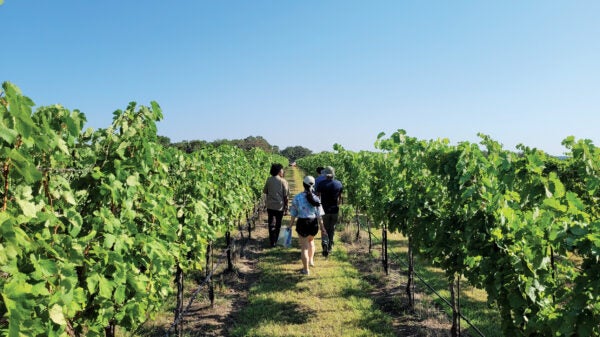
Zamora-Olivares gained initial seed funding from Fall Creek Vineyards, H-E-B and the Republic National Distributing Company, all of which remain current partners.
Over 30 of her students have been accepted into highly competitive national conferences. The quality of their research prepares them for their future endeavors in science, she says.
“Through the funding, I’m able to send students to different regional and statewide wine venues, as well as national conferences,” she says.
She connects students with the Texas wine industry through vineyard visits, webinars, and guest speakers from partners such as H-E-B leadership and vineyard owners. Her students participate annually in Texas wine community showcases, sharing what they’ve learned to support the state’s growing industry.
“It’s a very rich interaction to learn from each other while supporting students in their research and sending them around the country to present what they’ve learned,” Zamora-Olivares says. “That’s the beauty of it all.”
One of her students was recently accepted into UC Davis’ master’s program in enology and viticulture. Watching students succeed after they leave the stream has been the most rewarding part of her work.
“In the end, it’s about collaboration,” Zamora-Olivares says. “It has been a big effort I spend a significant part of my position working on, but I just love it. I think it’s really fantastic.”